Two Men. Two Weeks. One Dome.
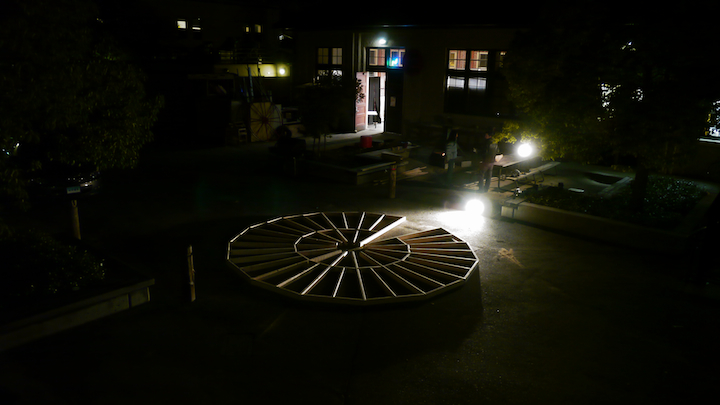
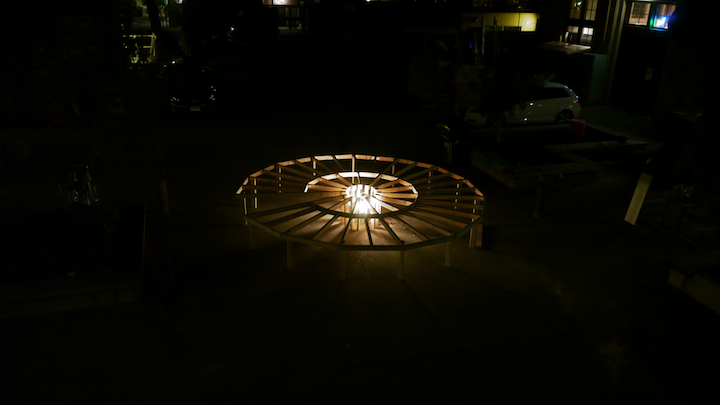
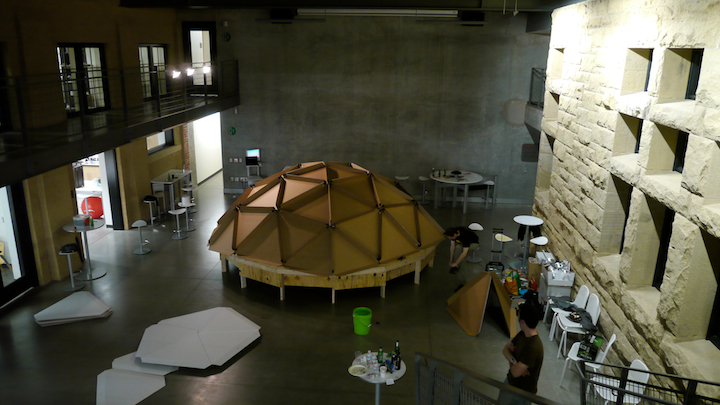
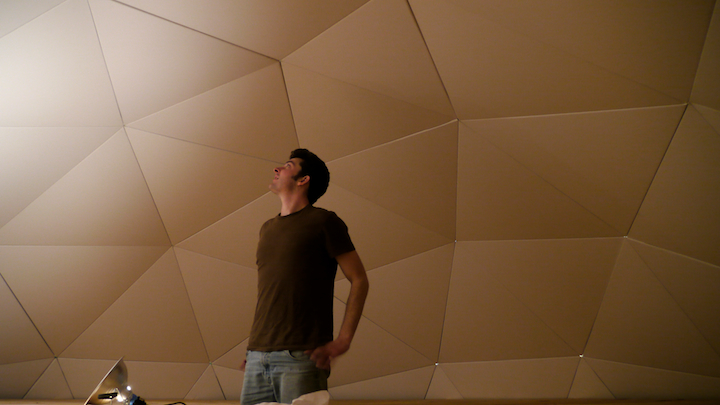
Our first Imaginarium prototype is an artful recreation of the long-defunct, eponymous emblem of the Stanford Design Program's experimental beginnings in the 1960s. The Imaginarium is an 18' diameter, 5/8 geodesic (3V) dome made of recycled cardboard enclosing a 15-sided, raised wooden platform. It is a multi-media environment designed to encourage creativity, alternative thinking and playful interaction. This project is in collaboration with Gregory Kress, a PhD candidate in the Stanford Center for Design Research.
The Imaginarium was up for one night in the atrium of the d.school on the eve of the Design Program's Personal Statements. We hosted roughly 200 people who waited 30 minutes for a 10-minute show that featured Charles & Ray Eames' Powers of Ten video overdubbed with Johnny Greenwood’s Popcorn Superhet Receiver.
BREAKING NEWS: On the success of this project, Greg and I founded Imaginary Labs, which is currently rebuilding The Imaginarium in the Hansen Experimental Physics Laboratory on Stanford Campus. Imaginary Labs is primarily engaged in the study of alternative environments and experimental media communications on human creativity.
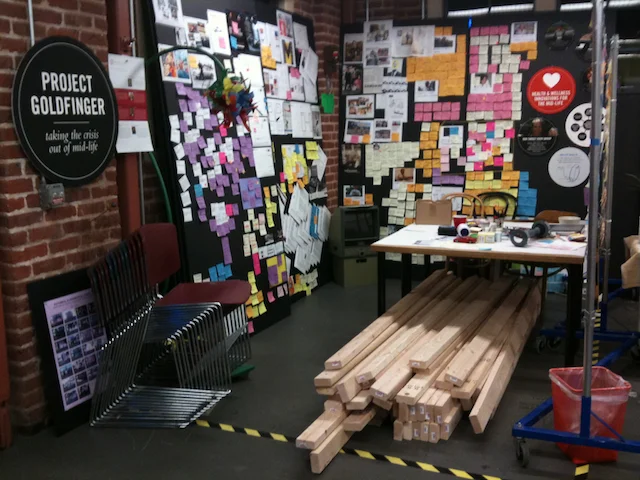
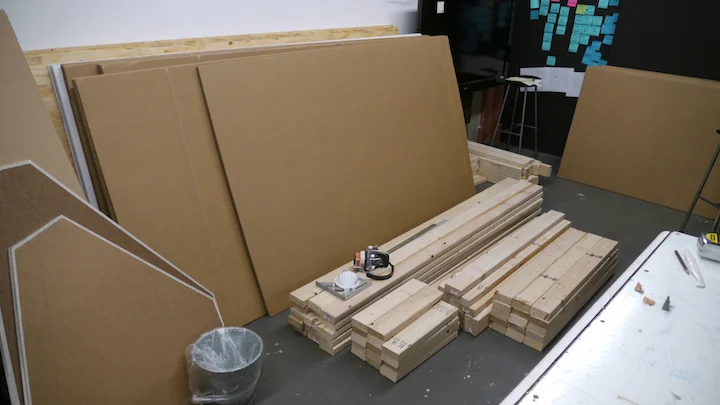
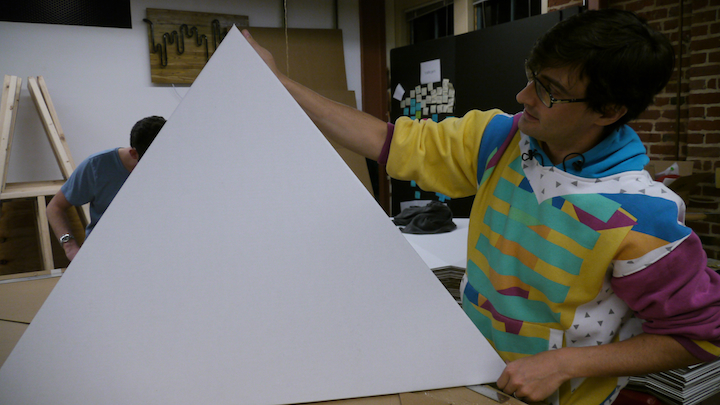
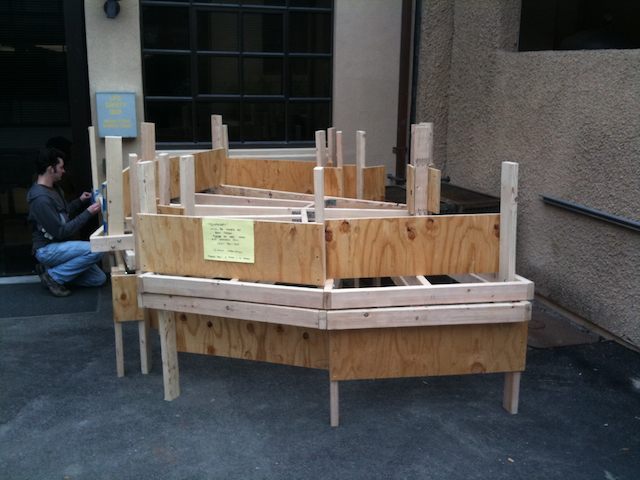
The following pictures detail the construction of the first prototype, which took place over just two weeks...outside...at night...heated only by a bonfire.
This report was created as a term project for ME120: History and Philosophy of Design taught by Dr. Barry Katz at Stanford University. It examines Western consumer behavior through the lens of baby products by diving deep into the history of strollers and the social pressures surrounding them.
UPDATE: We sold the Bee on Craigslist and eventually bought (and later sold) the City Mini, which has the simplest collapsing mechanism on the market and is well built with a ton of features, but at 1/3 the price of the Bee. Today we use a $30 generic umbrella stroller that collapses into nothing. The Aprica Cadence, though nice, was too big and the Presto restraint buckle was clumsy.
In the end, choose a stroller based on how easy it is to perform simple, daily tasks. Fancy and expensive does not necessarily mean more intelligently designed or functional.